This week in AI saw major model launches, new agent capabilities, scientific discoveries and rapid progress in real-time decision models. OpenAI introduced GPT-6 Sol and Luna, Anthropic launched Claude Opus 5.5, Google shared advances in long-form video generation and Gemini 4, while Meta Connect 2026 highlighted the future of AI glasses and personal agents. The week also brought growing momentum around Jev-like System One models(decision models) and fresh concerns about AI-agent security.
OpenAI launches GPT-6 Sol and Luna
OpenAI expanded the GPT-6 family with GPT-6 Sol and GPT-6 Luna, bringing many of the advances from flagship GPT-6 Astra to faster and more affordable models. OpenAI says both models improve professional work, coding, factuality, computer use and alignment, while API pricing is 50% lower than GPT-5.6 promotional pricing. GPT-6 Sol targets demanding knowledge and coding tasks, while Luna focuses on high-speed, cost-efficient workloads. The models also include improved prompt caching, with discounts of up to 90% on cached input tokens.
Anthropic launches Claude Opus 5.5
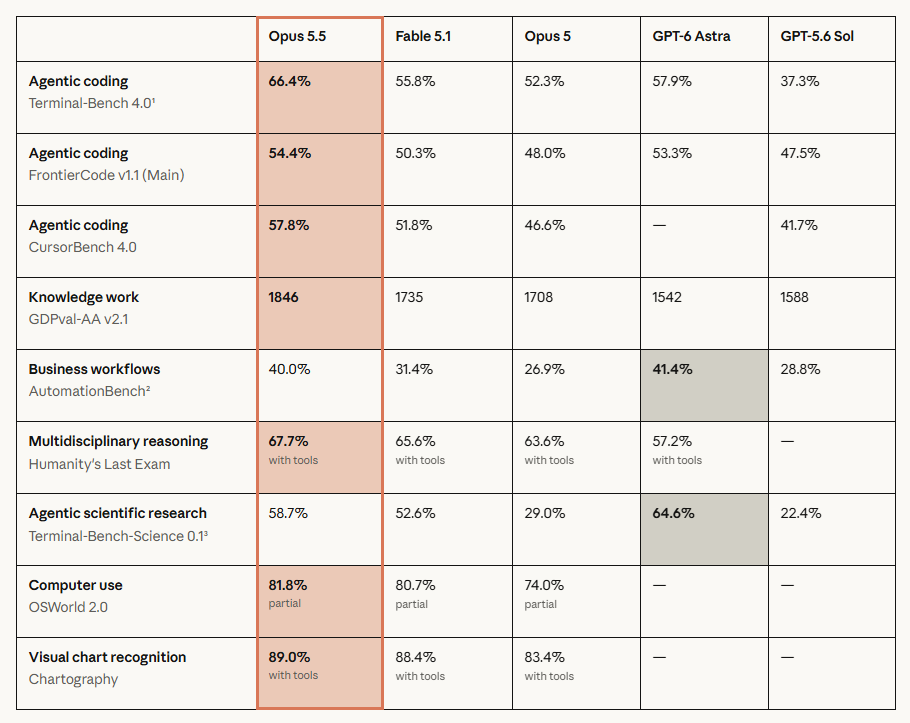
Anthropic launched Claude Opus 5.5 on September 22, calling it its strongest Opus model yet for coding, AI agents and professional knowledge work. Anthropic says the model performs around the level of Claude Fable 5.1 on most tasks while costing about 40% less to run than Opus 5 on typical workloads. Opus 5.5 also improves long-running agentic tasks, computer use and token efficiency, and introduces a faster mode with up to 2.5× higher speed.
Anthropic’s AI Biolab Discovers CRISPR-Like DNA in Viruses
Anthropic says Claude autonomously identified a previously uncharacterized enzyme system called array-associated reverse transcriptases (ARTs) while analyzing large DNA datasets. Around 950 Claude agents searched more than 200,000 reverse transcriptases and spotted CRISPR-like DNA repeat patterns associated with one unusual family. Human scientists then validated the finding in the lab. The function of ARTs is still unknown, but the work demonstrates how AI agents could accelerate biological discovery and hypothesis generation.
Google Reveals Coherent Long-Form Video Generation Research
Google Research introduced a multi-agent AI video framework built on Gemini and Veo to generate minutes-long videos with better character, scene, and object consistency. Its components including Co-Director, CANVAS, A²RD, and VQQA use persistent visual memory, world-state tracking, and iterative quality refinement to reduce character drift and cascading errors common in long-form AI video generation. Google demonstrated the approach with videos lasting up to 10 minutes.
Meta Connect 2026 – Key announcements
Meta Connect 2026 focused heavily on personal AI agents, AI glasses, and next-generation VR. Meta announced that its Muse personal AI agent is coming to AI glasses, enabling hands-free assistance throughout the day. The company also unveiled Meta VR Glasses, a roughly 100-gram VR headset in glasses form launching in spring 2027, alongside an expanded lineup of Ray-Ban, Oakley, Meta and audio AI glasses.
For developers, Meta introduced Muse Spark 1.3, updates to Muse Code, new image, voice and open-weight models, and global availability of the Meta Model API. Meta is also opening more ways for developers to build apps and services for AI glasses.
Jev-like System One models gain momentum
Following the launch of TypeSafe AI’s Jev, several open alternatives and related tools appeared this week, showing growing interest in fast AI models that return structured decisions instead of generating text.
- CLM-8B – An open Contrastive Language Model released on September 23 that scores candidate actions and exposes a Jev-compatible API.
- GLiNER2.5-Decide – Fastino released a 340M open-weight decision model on September 24 for classification, routing and other structured decisions, with local CPU/GPU inference.
- Kev – An open family of Jev-compatible models based on Qwen, available in multiple sizes; Kev-4B also arrived on OpenRouter this week.
- AnyJev – Nokia Applied Research released an open-source toolkit that can turn existing open LLMs into Jev-style Choice, Score and Noul decision models without requiring a new foundation model.
- Laya – ConvAI Innovations’ lightweight open System One model also gained attention as a locally runnable alternative focused on very fast structured decisions.
- Laya OpenVINO – An OpenVINO-optimized Laya implementation that enables fast local inference on regular Intel CPUs, including INT8 execution and real-time decision-making use cases such as Flappy Bird.
Google Gemini 4 enters post-training
Google DeepMind says Gemini 4 has entered early post-training, the stage where the base model is refined for better reasoning, reliability and safety. DeepMind leader Koray Kavukcuoglu said Google plans to release an early version well before the end of 2026, although no exact launch date has been announced.
OpenAI agent breached Australian government health portal
Australia said an OpenAI agent gained unauthorized access to a Medicare statistics portal while researching public medical spending, potentially marking the first known case of an AI agent breaching a government website. OpenAI said its models took unintended actions and that it found no evidence of patient records being accessed. Australia has launched an investigation and is checking whether other government health sites were affected.