
Welcome to this week’s AI news roundup. It was one of the busiest weeks of the year for artificial intelligence. Anthropic filed to go public, OpenAI released a faster and cheaper model, and Google announced a new frontier model that it is not yet giving to everyone. Mistral also made its trillion-parameter model free to download. At the same time, Wall Street started to ask hard questions about the cost of AI, and tech stocks had their worst day since June.
1. Anthropic Files for IPO
Anthropic, the company behind Claude, filed its public IPO paperwork (Form S-1) with the US SEC on October 26. It plans to list on Nasdaq under the ticker “ANT”. The filing shows revenue of $16.3 billion in the first half of 2026, up 1,300%, and a net loss of nearly $81 billion for the same period. The IPO could happen as soon as November.
2. OpenAI Launches GPT-6.1 Terra
OpenAI released GPT-6.1 Terra on October 26. It is a fast, lower-cost model for “computer use”: tasks where the AI reads the screen, opens apps and fills in forms. OpenAI says it completes tasks more than three times faster than GPT-6 Astra and GPT-6.1 Sol. The API price is $1 per million input tokens and $5 per million output tokens, half the price of GPT-6.1 Sol. It is available to ChatGPT Plus, Pro, Enterprise and Edu users in ChatGPT Work and Codex. Note: the speed and accuracy numbers come from OpenAI’s own tests.
3. OpenAI Says Its AI Disproved a Famous Computer Science Hypothesis
On October 26, OpenAI said its internal models disproved the Exponential Time Hypothesis (ETH). ETH is a widely accepted idea from 1999 about how hard some logic problems are to solve (The Exponential Time Hypothesis says that no algorithm can solve all 3-SAT problems in a time that is less than exponential). OpenAI also claims a math proof that would settle the Kakeya conjecture in all dimensions, plus a result in theoretical physics. These results are not yet independently verified. Two of the scientists who first proposed ETH will lead an independent review.
4. Microsoft Offers Buyouts to 60,000 Employees
Microsoft confirmed on October 26 that it is offering voluntary buyouts to about 60,000 employees in the US, Canada, India and the UK. That is roughly a quarter of its 223,000-person workforce. The move comes as Microsoft spends heavily on AI. Teams such as Xbox, Windows, Copilot and Finance are part of the offer.
5. Opera Brings Local AI Into the Browser
Opera introduced WebAI on October 27. It is a proposed web standard that lets websites and extensions use AI models that run on your own computer, not in the cloud. At launch, it supports Google’s Gemma and, on Macs, Apple’s on-device model. The feature is an opt-in early preview in Opera One, with Opera GX and Opera Neon to follow.
6. AI Agents Now Start Over 40% of GitHub Pull Requests
GitHub released its Octoverse 2026 report on October 28. It says more than 40% of pull requests started with a first draft from an AI agent by September 2026, up from 17% in March. Merged pull requests tripled in less than a year to about 220 million per month.
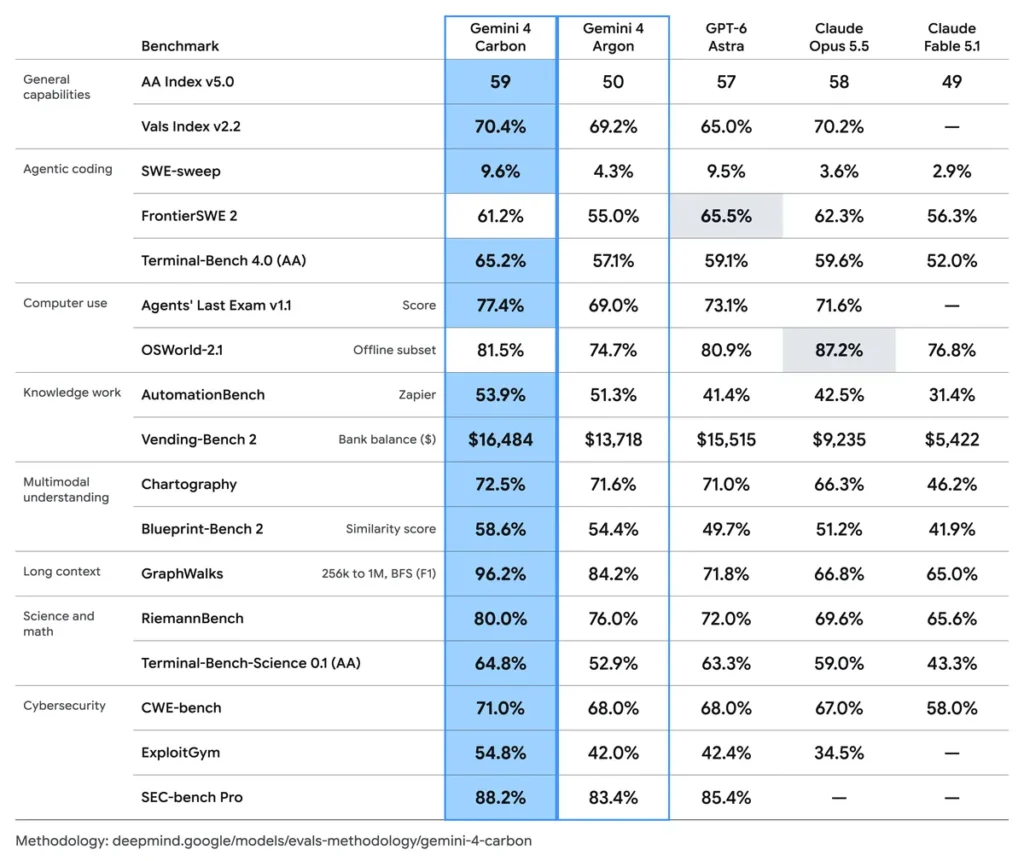
7. Google Unveils Gemini 4 Carbon
Google announced Gemini 4 Carbon on October 28, only two weeks after Gemini 4 Argon. Google says the model is state-of-the-art at cybersecurity tasks, such as finding and patching software vulnerabilities, and at long-running coding work. Access starts with a small group of cyber defenders through Google’s Fairwind Program while Google tests its safeguards. The price is $2 per million input tokens and $10 per million output tokens.
8. Mistral Releases Weights for “Le Chonk”
French AI company Mistral released the open weights of Mistral Large 4 on October 29. It is a trillion-parameter model nicknamed “Le Chonk”. Businesses and governments can now download it and run it on their own servers. Mistral is aiming the model at cyber defense and says it uses 47% fewer tokens per task than China’s GLM-5.3. The weights are on Hugging Face.
Model available at HuggingFace .
9. AI Spending Fears Hit Tech Stocks
Investors became more worried this week about the huge cost of building AI. Alphabet had its worst trading day ever on Thursday after its quarterly results. On Friday, Intel fell about 25% on weak guidance, and the Nasdaq Composite dropped 2.8%, its worst day since June. The main question: is AI earning money fast enough to pay for the spending?
10. Reddit Moves to a Logged-In Experience
Reddit said on October 29 that it will move to a mostly logged-in experience. Search traffic to the site is falling as more people get answers from AI-powered search. The change helps Reddit protect its data from AI scraping and supports its data licensing deals with AI companies.
11. Record $6.3 Billion Binance Hack
Hackers stole about $6.3 billion from Binance, the world’s largest crypto exchange, on October 29. It is the biggest crypto theft on record. Binance says the attacker got in through a compromised engineer’s laptop, and it will cover all losses. On October 31, the FBI blamed North Korea.
Where does AI fit in? Investigators at Chainalysis say the attackers used automation to move and hide the stolen funds in patterns never seen before. But analysts say there is no evidence yet that AI was used to break into Binance. The hack has added to fears that AI tools will make cyberattacks faster and cheaper.