This was one of the busiest weeks of the year in AI. Anthropic, Google, and Meta all released new models within four days. Nvidia lost its founder and CEO. Anthropic set the terms for one of the largest IPOs in history, and OpenAI gave its AI agents a way to pay for things.
Here are the top AI news stories from November 8 to November 15, 2026.
Anthropic Releases Claude Fable 5.2 and Mythos 5.2
Anthropic released Claude Fable 5.2 and Claude Mythos 5.2 on November 9. The company says the new models give answers up to 30% faster and are better at coding, reasoning, and vision.
Fable 5.2 is also cheaper. The API price is now $8 per million input tokens and $40 per million output tokens, down from $10 and $50. Fable 5.2 is available to all users. Mythos 5.2 is the same model with fewer cybersecurity and biology safeguards, and only approved organizations can use it.
Google Makes Gemini 4 Carbon Available
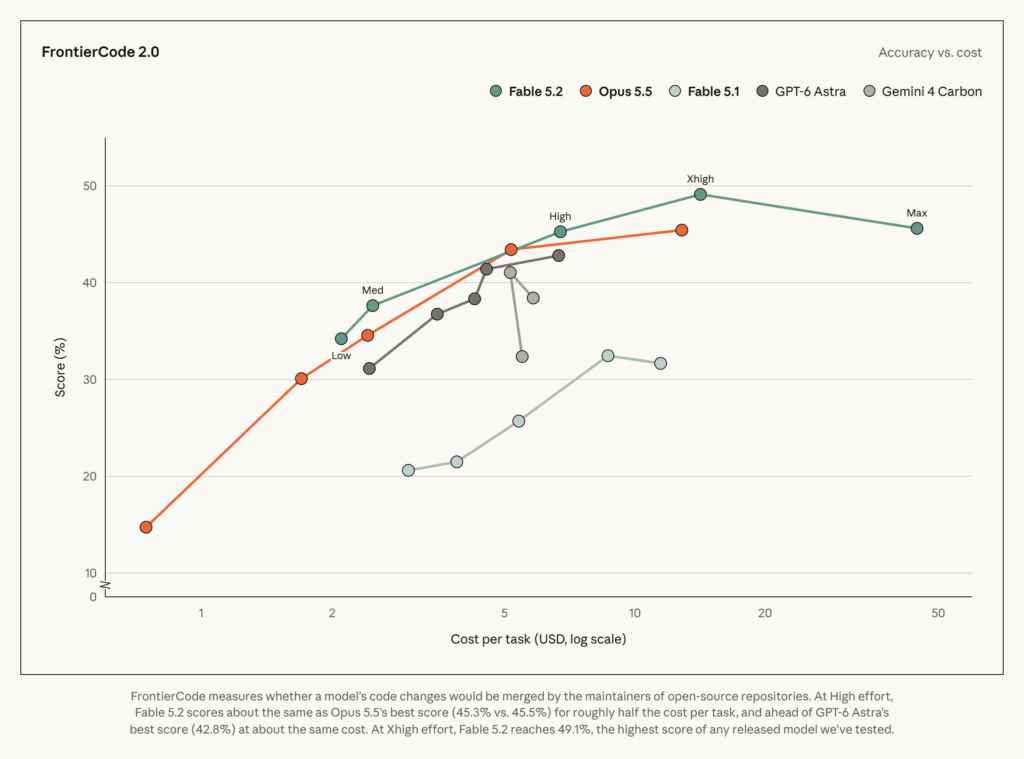
Google made Gemini 4 Carbon available to developers, enterprises, scientists, and consumers on November 10. Google calls Carbon its strongest model. It is built for long agent tasks, software engineering, scientific reasoning, and cybersecurity work.
Carbon is available through the Gemini API in Google AI Studio and Gemini for business. The introductory price is $2 per million input tokens and $10 per million output tokens, the same as Gemini 4 Argon.
Google Launches Gemini 4 Hydrogen
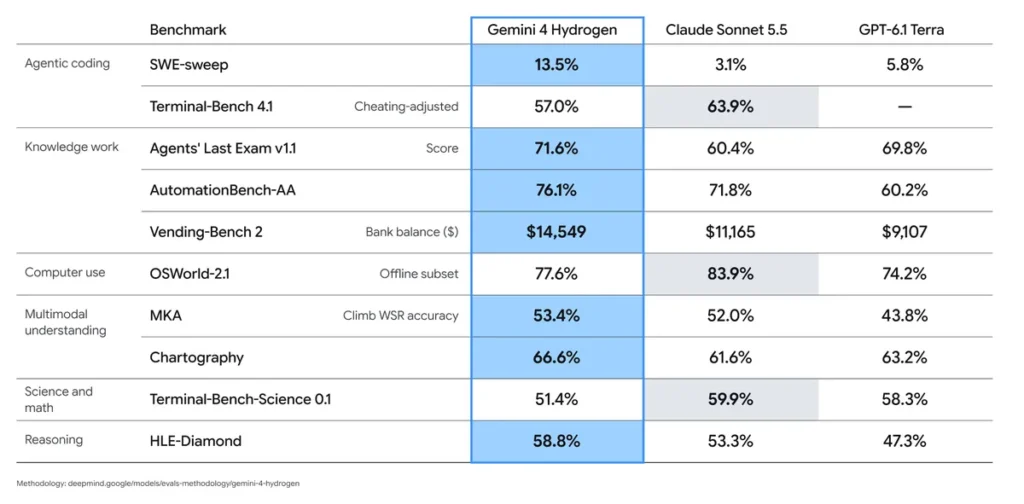
Two days later, on November 12, Google released Gemini 4 Hydrogen. It replaces Gemini 3.8 Flash as the fast model in the Gemini family. Google says Hydrogen completes tasks 2.5 times faster than 3.8 Flash and makes far fewer false claims.
Hydrogen is rolling out to everyone in the Gemini app, Google Search, and Google AI Studio, including free users. For developers, it costs $1.50 per million input tokens and $7.50 per million output tokens.
Meta Launches Muse Ember
Meta released Muse Ember on November 9. It is the smallest and cheapest model in the Muse family. Meta built it for the simple, repeated jobs that AI agents do all day, such as tool calls, small code fixes, routing, and reading long documents.
Muse Ember accepts text, images, audio, and video. It costs $0.10 per million input tokens and $0.50 per million output tokens. It is available in Muse Code and the Meta Model API. Meta did not release the model weights.
Jensen Huang Resigns as Nvidia CEO
Nvidia announced on November 12 that Jensen Huang resigned as President, CEO, and board member, effective immediately. Huang co-founded Nvidia in 1993 and led it for 33 years.
CFO Colette Kress is now interim CEO while the board looks for a permanent replacement. Harvey C. Jones became the first chair of the Nvidia board. The resignation came after media reports about Huang’s personal relationships, which are also the subject of questions from U.S. lawmakers. Nvidia shares fell about 4% on the day.
Anthropic Sets IPO Price Range
Anthropic started its IPO roadshow on November 10 with a price range of $70 to $78 per share. The company plans to sell 825 million shares, which can raise up to $64.4 billion. At the top of the range, Anthropic is valued at about $1.4 trillion on a fully diluted basis.
The shares will trade on the Nasdaq under the ticker ANT. Trading is expected to start on November 19. Seven partners, including Google and Nvidia, also agreed to buy $26 billion of non-voting stock at the IPO price.
OpenAI Launches ChatGPT Wallet
OpenAI introduced ChatGPT Wallet on November 13. It lets OpenAI’s “dots” agents pay for purchases with a saved card. The agent does not see the real card details, and the user must approve each purchase. OpenAI built the wallet with American Express, Mastercard, and Visa.
The wallet is rolling out first to ChatGPT Pro subscribers in the US who are 18 or older. Earlier in the week, on November 10, OpenAI also opened Businesses in ChatGPT in beta. Companies can claim a verified profile and upload product feeds with prices and stock.
Anthropic Adds Sheets, Whiteboards, and Meetings to Claude
Anthropic showed a set of office tools at an event on November 10. The tools include Claude Sheets (a spreadsheet), Claude Whiteboards, and Claude Meetings (a video call assistant). Most of them are in beta for paid users, Bloomberg reports.
Google Adds Two New TPU Chips
Google announced TPU 8tx and TPU 8i Max on November 9. TPU 8tx protects sensitive data and model weights at the hardware level, for secure AI work. TPU 8i Max puts two TPU 8i chips in one package, which doubles the compute and memory bandwidth for large context windows.
Google says this is the first time it has introduced four TPU systems in one year.
United Airlines Blocks AI Agents
United Airlines said on November 11 that it will block unauthorized third-party AI agents from its website and app. The rule also applies to bookings made through travel agencies and aggregators. United says the agents create security and privacy risks.
OpenAI Closes Its Stand-Alone Robotics Team
OpenAI closed its stand-alone robotics team and moved the staff to other groups, Fortune reported on November 13. Robotics researchers now work in the main research team under Chief Research Officer Mark Chen. Hardware staff moved to the Applied group under President Greg Brockman.
OpenAI told Fortune that it is not leaving robotics. The company says its general-purpose models can now control robots directly.
LangChain Raises $300 Million
AI agent startup LangChain raised a $300 million Series C round at a $3 billion valuation on November 13. CapitalG led the round. The valuation is more than double the $1.25 billion from one year ago. LangChain says its LangSmith platform now has 7,000 customers.
Autonomous Agent Cyber Intrusions
Security researchers disclosed two major agent-driven attacks: Operation Snowball (Nov 8), where a jailbroken agent running on DeepSeek Flash compromised a European telecom and 13 hosted organizations for over two weeks, and AntiFox (Nov 12), an AI pentesting fork caught exfiltrating production AWS credentials.